English Sparkling Wine vs Champagne: What's the Difference?

Put a glass of English sparkling next to a glass of Champagne and the first surprise is how similar they look: same pale gold, same fine bead, same steady stream of bubbles rising through the glass. The second surprise is how quickly they separate once you actually taste them. England has spent the past two decades proving it belongs at the same table as France, and the interesting question is no longer whether English fizz is any good, but how its style genuinely differs — and which bottle suits the evening in front of you.
The grapes: same three varieties, different rulebook
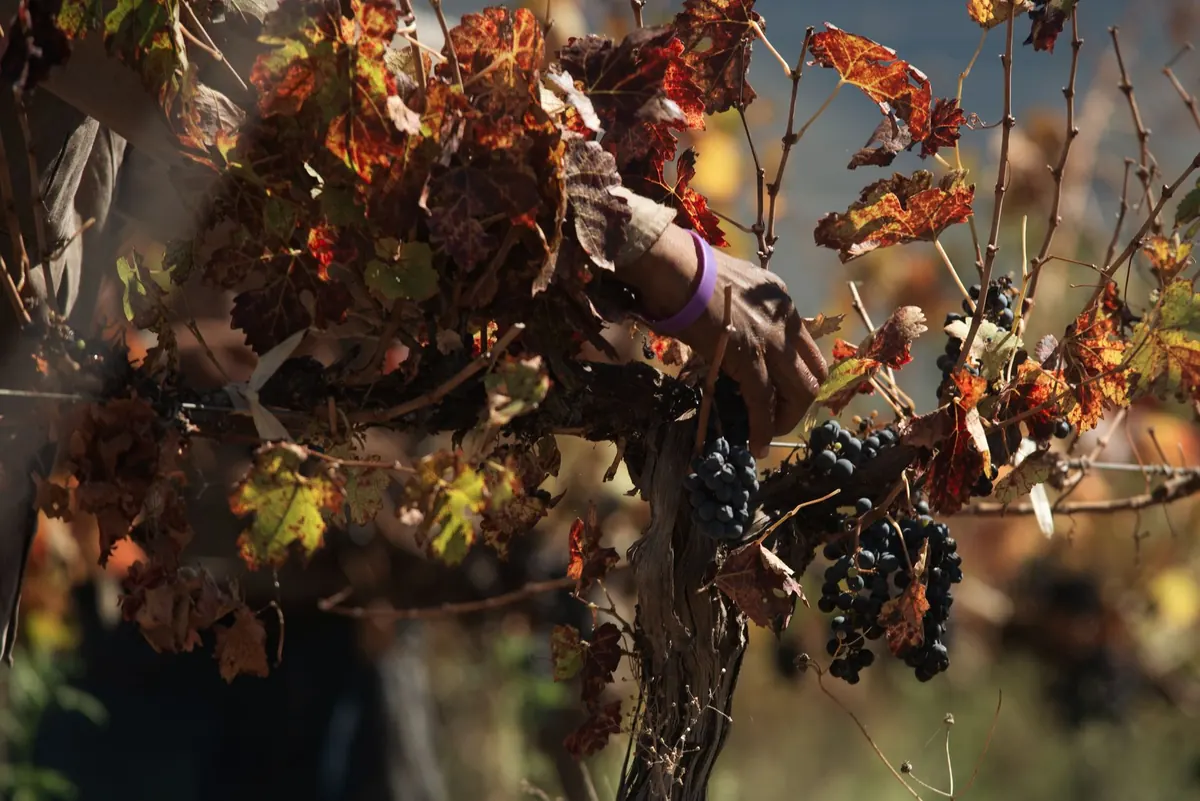
Walk through almost any vineyard in Sussex, Kent or Hampshire and you will find the trio that built Champagne's reputation: Chardonnay, Pinot Noir and Pinot Meunier. That is no accident. All three bud late, which protects them from spring frost, and all three ripen early enough to stand a chance in a cool northern climate.
Where the two regions part company is in what is allowed. Champagne's appellation rules permit those three plus four rarely seen varieties — Arbane, Petit Meslier, Pinot Blanc and Pinot Gris — and nothing else. England works to no such rulebook, so growers can plant what they like. Pinot Blanc and Pinot Gris appear in some English blends, and a few producers work with Bacchus, Seyval Blanc or Ortega. Even so, the majority of English sparkling wine is built on the classic Champagne mix, usually labelled as a blend, a Blanc de Blancs (Chardonnay only) or a Blanc de Noirs (the two Pinots).
The traditional method, briefly
Both regions use the traditional method: a dry base wine is bottled with sugar and yeast, a second fermentation takes place inside that bottle, and the wine then rests on its spent yeast cells before being riddled, disgorged and topped up with dosage. The single biggest technical difference between a typical English bottle and a typical Champagne is how long that lees ageing lasts.
Climate and soil: two cool places, two different temperaments
Champagne has a semi-continental climate: cold winters, warm summers, reasonable sunshine and rain spread through the year. Its soils are famously chalky, and that chalk does two useful things — it drains freely and it holds enough water to keep vines going through a dry spell. In the Côte des Blancs, Chardonnay grown on that chalk gives the taut, almost saline edge that Champagne lovers recognise instantly.
England is a different proposition. Vineyards sit further north, with a maritime climate that brings mild, wet winters, plenty of cloud and a long, slow ripening season that often runs deep into October. Sugar accumulates gradually while acidity stays high. That is why English wines can taste so sharp and focused in their youth, and why vintage variation matters far more here than in most of the wine world.
There is a geological link worth knowing about. The chalk that underpins Champagne reappears on this side of the Channel, running through the South Downs and into parts of Hampshire and Sussex. Add the greensand and clay-with-flint soils of Kent, and you have a patchwork that producers are still learning to read.
Flavour: acidity, fruit and the brioche question
Young English sparkling wine tends to lead with green apple, lemon peel, white blossom and a chalky, wet-stone freshness. The acidity is deliberately high, and many producers keep dosage low — Extra Brut or Brut Nature — to preserve that tension. In a warm year you get riper orchard fruit and a creamier mid-palate; in a cool, damp year the wine can taste lean and green if the grower picked too early.
Champagne usually arrives with more weight behind the fruit. The autolytic characters that come from extended lees ageing — brioche, toasted almond, honey, a faint pastry note — are more pronounced, partly because the rules require a minimum of fifteen months on the lees for non-vintage and three years for vintage, and partly because the big houses can afford to hold stock far longer than that.
This gap is closing. Plenty of English producers now age their top cuvées for three years or more, and the results can be genuinely biscuity. But if you taste a young, keenly priced English bottle against a mature Champagne, the difference in texture and savoury depth is obvious. Serve both in a white wine glass rather than a flute; you will smell considerably more.
Price: what you are actually paying for
England makes wine on a tiny scale. A single estate's entire annual output can be smaller than one Champagne house's weekly run, and every bottle carries the cost of expensive vineyard land, hand harvesting, low yields and years of storage before release. Add UK duty and VAT, which sit heavily on sparkling wine, and the economics become brutal.
The practical result is that English sparkling wine rarely undercuts Champagne. Expect it to sit alongside mid-priced Champagne rather than below entry-level fizz, and expect the best English bottles to be priced with real confidence. Factors that drive the number on the label:
- Vineyard size and yield — small parcels cost more per bottle to farm
- Hand harvesting, which is standard for quality sparkling wine
- Time on the lees, since every month in the cellar is money tied up
- Land prices in Sussex, Kent and Hampshire
- Vintage variation, which can wipe out a crop and a year's income
That said, freshness has its own value. If you want a crisp, low-dosage aperitif style, an English bottle at a similar price to a commercial Champagne is often the more interesting drink.
Food pairing: where each style earns its place
High acidity and bubbles are the great fat-cutters, so both wines handle fried and buttery food beautifully. The differences come down to weight and flavour intensity.
- Oysters, crab and shellfish: both work, but an English Blanc de Blancs with searing acidity is a superb match.
- Fish and chips, tempura, fried chicken: the bubbles scrub the palate clean between bites. A Blanc de Noirs adds enough body to keep up.
- Smoked salmon and cured fish: classic with either, though Champagne's creamy autolytic notes soften the smoke.
- English hard cheeses: a mature cheddar or Lincolnshire Poacher with an English Blanc de Noirs is a genuinely great local pairing.
- Caviar, parmesan, roast chicken, sushi: the weight of a good Champagne handles these richer, saltier flavours with more ease.
- Avoid: very sweet desserts, which will make a dry sparkling wine taste thin and tart.
How to compare them yourself
The fairest test is a tasting at home with two bottles at a similar price and style. Here is a simple way to run it:
- Buy a Blanc de Blancs from England and a Blanc de Blancs from Champagne. Matching the style removes one variable.
- Chill both to around 8–10°C, then pour into white wine glasses rather than flutes.
- Taste blind if you can — ask someone to pour them into numbered glasses. Preconceptions are strong with these two regions.
- Look first, then smell. Note the fruit, then the yeasty, bready notes.
- Taste and hold the wine in your mouth for a moment. Ask which one has more acidity and which has more weight.
- Let both glasses sit for ten minutes and taste again. Warm sparkling wine reveals far more than a chilled one.
Do that once and you will stop thinking of English sparkling as a substitute for Champagne. It is a distinct style from a distinct place — leaner, sharper, often thrilling with seafood — while Champagne remains the broader, deeper, more consistently rich option. Both deserve space in the fridge.
Photo: NickyPe / Pixabay